Veuillez utiliser votre appareil en mode portrait
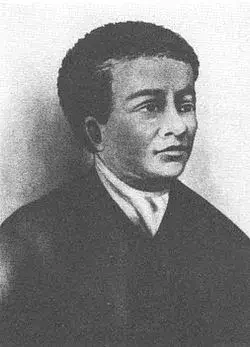
Par Benjamin Banneker
Banneker a grandi dans une ferme près de Baltimore, issu d'une lignée d'hommes et de femmes affranchis. À une époque où la quasi-totalité des Afro-Américains étaient maintenus en esclavage, il a bénéficié d'une éducation Quaker limitée mais a surtout développé ses connaissances seul, en dévorant tous les livres à sa portée. Ami de la famille Ellicott, il a eu accès à des instruments de mesure et des traités d'astronomie qui ont propulsé sa carrière scientifique.
Sa première prouesse technique, réalisée à seulement 22 ans, fut la fabrication d'une horloge à carillon entièrement en bois. En observant simplement le mécanisme d'une montre de poche, il a calculé et sculpté chaque engrenage et rouage au couteau. L'horloge a fonctionné avec précision pendant plus de 40 ans.
Plus tard, il s'est illustré dans l'astronomie en publiant une série d'almanachs contenant des calculs complexes sur les éclipses et les cycles planétaires. Il a également servi d'assistant topographe pour tracer les limites de la future capitale, Washington D.C.
L'héritage de Banneker est à la fois scientifique et politique. En envoyant le manuscrit de son almanach à Thomas Jefferson, il a directement défié les préjugés raciaux de l'époque et plaidé pour l'abolition de l'esclavage. Aujourd'hui, il est célébré comme le premier grand scientifique afro-américain. Sa vie est un symbole de résistance intellectuelle, et de nombreuses institutions éducatives portent son nom à travers les États-Unis.
Bien que ses contributions aient été longtemps négligées par l'histoire officielle, Banneker a été réhabilité au $XX^{e}$ siècle. Sa maison est devenue un musée historique à Oella, dans le Maryland. En 1980, le service postal des États-Unis a émis un timbre en son honneur, et il reste aujourd'hui une figure centrale de l'identité culturelle et scientifique de Baltimore.