Veuillez utiliser votre appareil en mode portrait
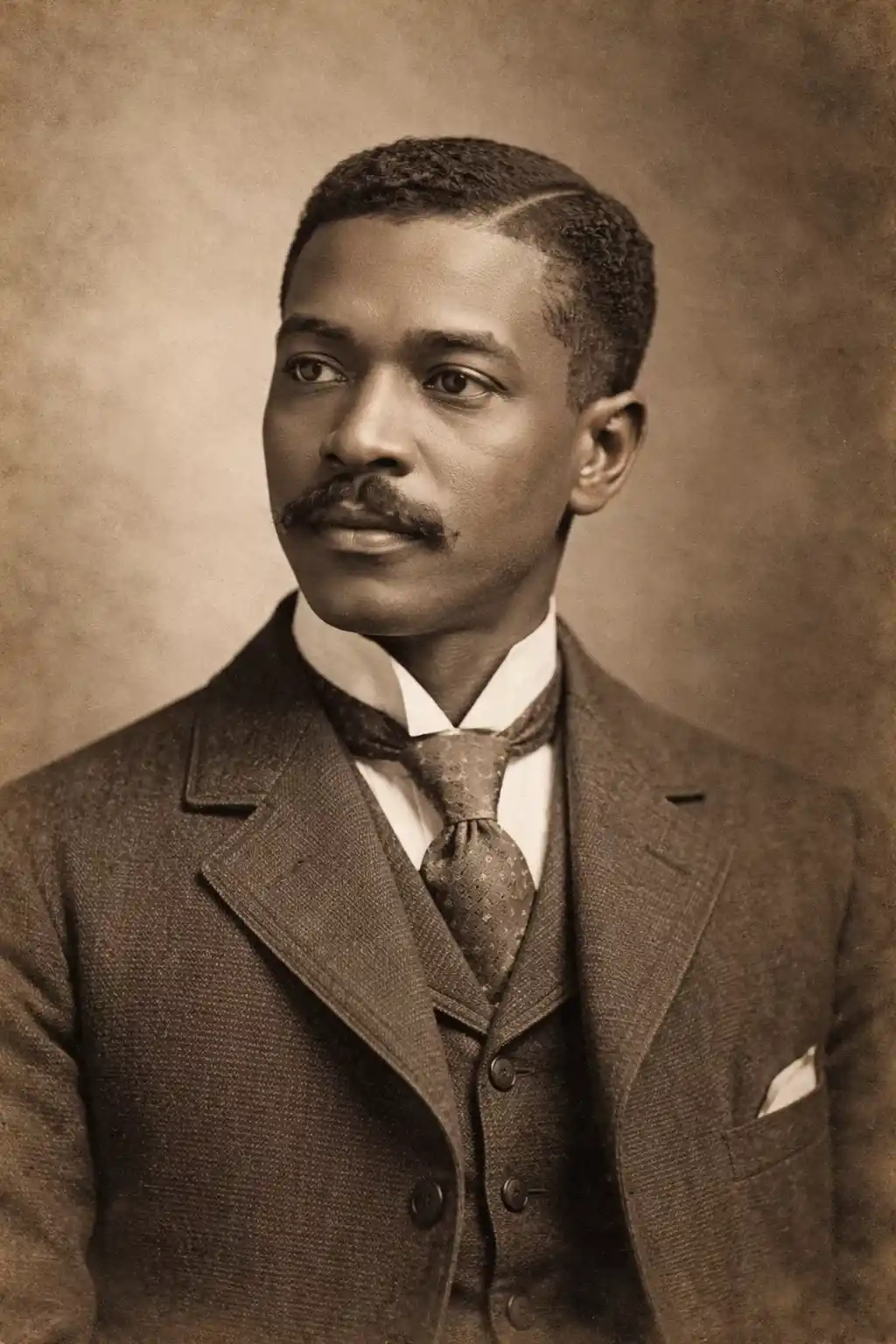
Par William D. Davis
À cette époque, le cheval restait le pilier central du transport, du travail agricole et des opérations militaires, particulièrement dans l'Ouest américain. Les cavaliers parcouraient d'immenses distances, et les secousses répétées causées par le trot étaient une source majeure de fatigue physique et de douleurs dorsales. C'est dans ce contexte de nécessité pratique que Davis a imaginé un système permettant de soulager les voyageurs et les soldats passant des journées entières en selle.
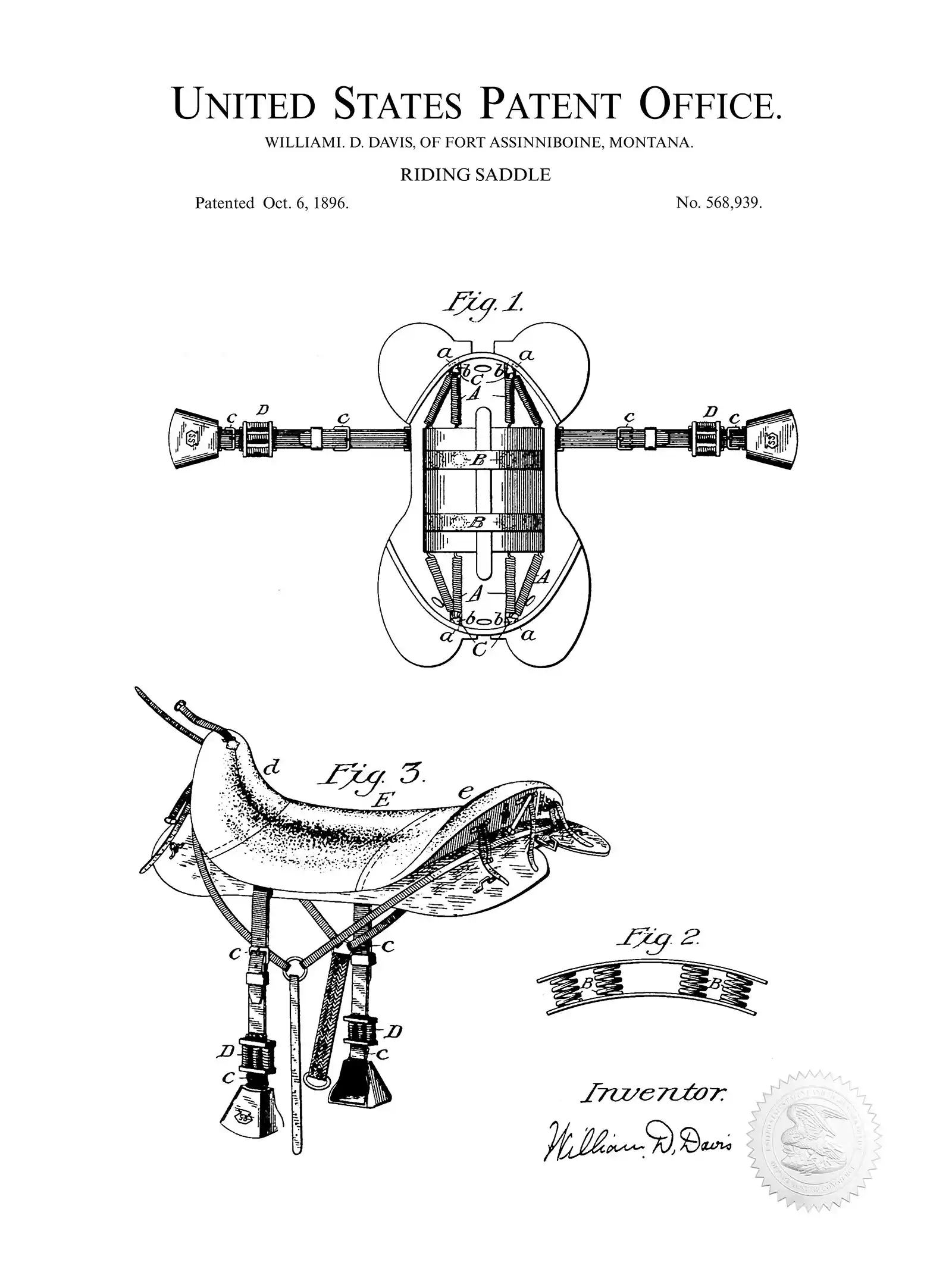
L'invention de William D. Davis n'est pas une selle ordinaire, mais une structure intégrant un système complexe de ressorts horizontaux et verticaux. Ces ressorts, placés stratégiquement sous le siège et au niveau des étriers, agissaient comme de véritables amortisseurs de chocs.
Cette conception permettait d'absorber l'énergie verticale produite par le mouvement du cheval, offrant une élasticité et un ajustement automatique qui rendaient la conduite plus fluide, même avec des montures rapides.
L'impact de cette selle améliorée se mesurait par le confort et la durabilité accrus pour les utilisateurs de longue distance. En réduisant les vibrations douloureuses, l'invention de Davis permettait d'augmenter l'endurance des cavaliers militaires et des coursiers. Elle préfigurait les recherches modernes sur l'ergonomie et l'absorption des impacts que l'on retrouve aujourd'hui dans les selles de haute performance et les équipements de transport motorisés.
Le brevet déposé le 13 mars 1896 et publié le 6 octobre de la même année témoigne de l'ingéniosité de William D. Davis. Bien que son nom soit moins connu du grand public, son travail demeure un exemple précieux de l'apport des inventeurs noirs à l'amélioration technique de la vie quotidienne dans l'Amérique frontalière du $XIX^{e}$ siècle.