Veuillez utiliser votre appareil en mode portrait
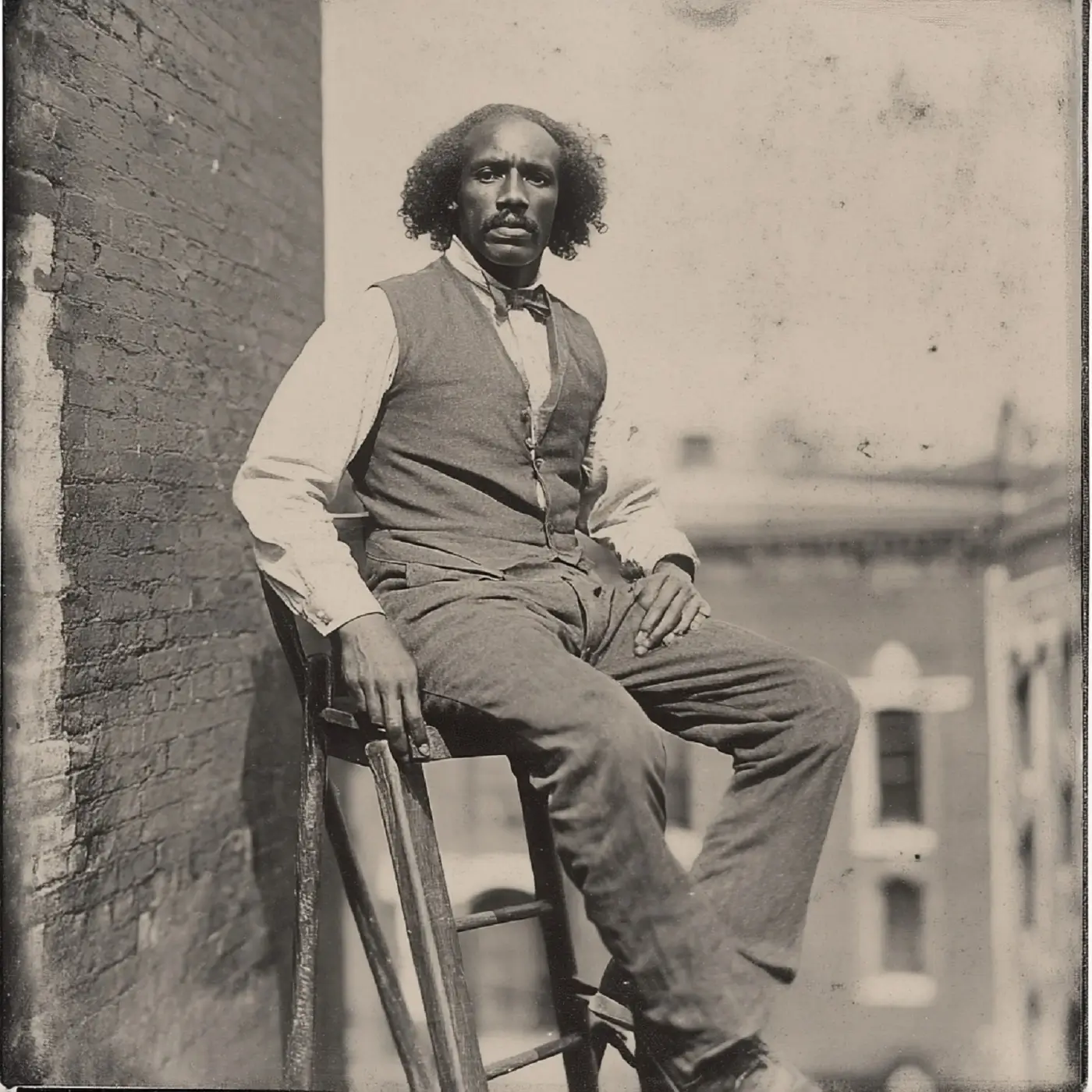
Par Joseph Richard Winters
Né en Virginie d'un père briqueleur et d'une mère amérindienne (Shawnee), Winters s'installe en Pennsylvanie vers 1840. Mécanicien pour le chemin de fer, il est également un membre actif du Chemin de fer clandestin (Underground Railroad). Il aurait notamment organisé la rencontre historique entre Frederick Douglass et John Brown avant le raid de Harpers Ferry en 1859. C'est son esprit civique et ses compétences en mécanique qui l'ont poussé à améliorer les échelles de pompiers, qui étaient alors souvent en bois, lourdes et peu maniables.
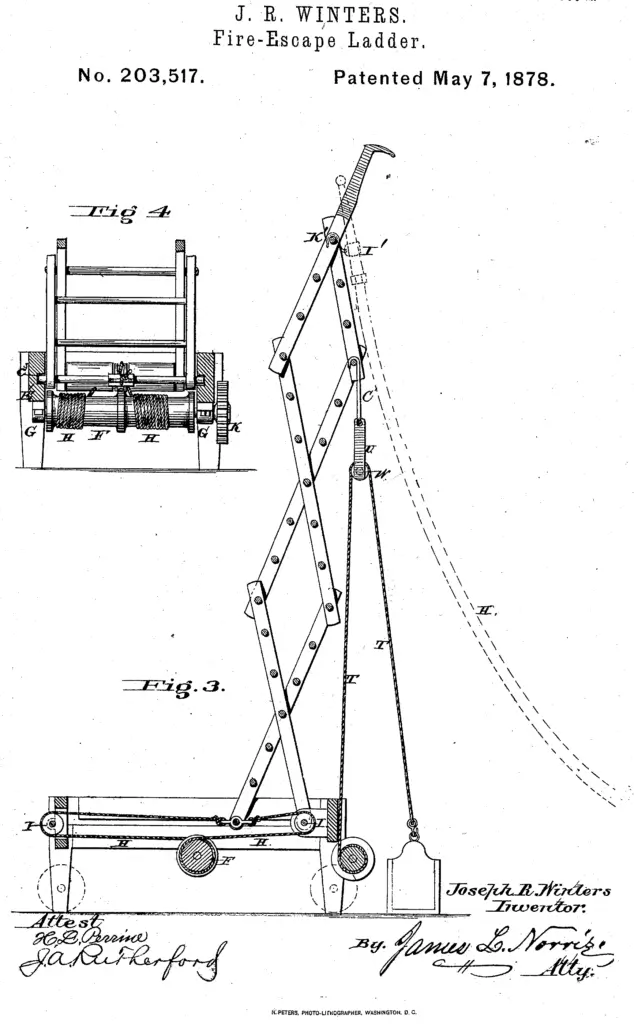
Bien que l'idée d'une échelle sur wagon existait déjà, Winters a déposé le brevet n° 203 517 le 7 mai 1878 pour une version révolutionnaire. Contrairement aux modèles précédents, son échelle remplaçait le bois par un cadre métallique avec des marches parallèles.
Il a ensuite déposé deux autres brevets : un en 1879 pour améliorer la mobilité sur le wagon, et un en 1882 (n° 258 186) pour une version de l'échelle pouvant être fixée directement aux bâtiments.
L'impact de Winters a été immédiat : le département des incendies de Chambersburg a été l'un des premiers à utiliser son échelle métallique montée sur un wagon tiré par des chevaux. Sa conception a ouvert la voie aux échelles télescopiques modernes en métal utilisées par les camions de pompiers aujourd'hui. Son héritage est celui d'un homme polyvalent, à la fois poète, défenseur des droits humains et ingénieur de sécurité.
Winters est reconnu comme une figure majeure de l'histoire de la Pennsylvanie. En 2005, la Commission historique et muséale de l'État a érigé une plaque commémorative en son honneur à Chambersburg. Bien que son autobiographie ait disparu, sa contribution à la sécurité publique et à la lutte contre l'esclavage reste gravée dans l'histoire américaine.