
Veuillez utiliser votre appareil en mode portrait
Par Alexander P. Ashbourne

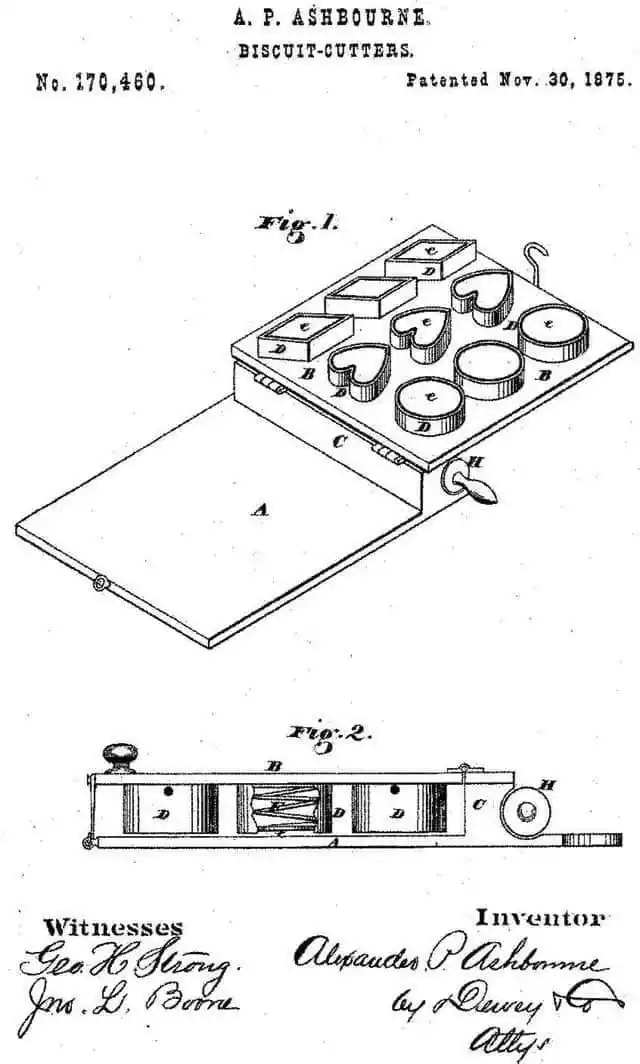

Après avoir été libéré de l'esclavage en Pennsylvanie, Ashbourne s'est imposé comme l'un des traiteurs les plus respectés de Philadelphie. En 1863, lors de la célébration de l'Émancipation, il remarque que les biscuits servis sont façonnés grossièrement à la main. Il consacre alors dix ans de sa vie à concevoir un outil capable de garantir une forme et une taille identiques pour chaque biscuit.
Le brevet n° 160,450 décrit un appareil doté d'un mécanisme à ressort et d'une planche facilitant le chargement et le déchargement de la pâte. L'innovation repose sur des plaques métalliques interchangeables de diverses formes.
Le cuisinier n'avait qu'à exercer une pression sur la plaque pour découper instantanément la pâte selon des formes spécialisées, assurant une régularité parfaite.
Cette invention a marqué une étape importante vers la standardisation de la production alimentaire. Elle a permis aux boulangers et traiteurs de gagner un temps considérable tout en améliorant la présentation de leurs produits, posant les bases des ustensiles de découpe modernes utilisés en pâtisserie.
Bien que sa vie personnelle soit peu documentée, son brevet déposé en 1875 reste une preuve formelle de son ingéniosité technique et de sa volonté de professionnaliser les métiers de bouche à une époque de grands changements sociaux.