Please use your device in portrait mode
By Alexander P. Ashbourne
After being freed from slavery in Pennsylvania, Ashbourne established himself as one of Philadelphia's most respected caterers. In 1863, during the Emancipation Celebration, he noticed that the biscuits served were simply hand-patted and lacked form. He then dedicated a decade to creating a tool capable of guaranteeing an identical shape and size for every biscuit.
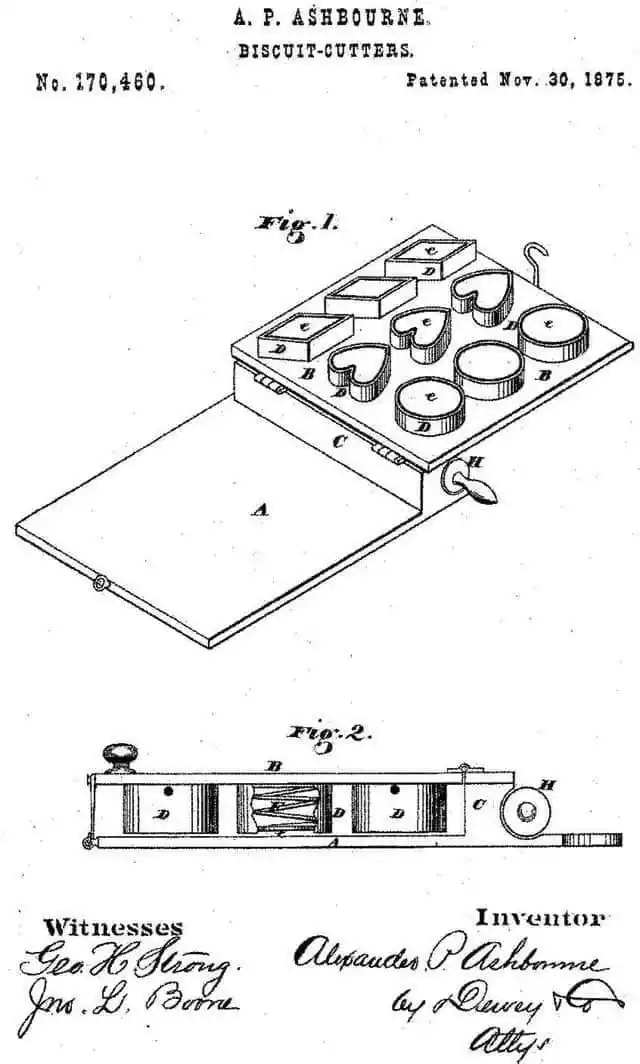
Patent No. 160,450 describes a device featuring a spring-loaded mechanism and a board for easy loading and unloading of dough. The innovation lies in the interchangeable metal plates of various shapes. The cook simply pushed down on the plate to instantly cut the dough into specialized shapes, ensuring perfect regularity.
This invention marked an important step toward the standardization of food production. It allowed bakers and caterers to save considerable time while improving the presentation of their products, laying the groundwork for modern pastry cutting tools.
Although his personal life is sparsely documented, his 1875 patent remains formal proof of his technical ingenuity and his desire to professionalize the food industry during a period of significant social change.