Please use your device in portrait mode
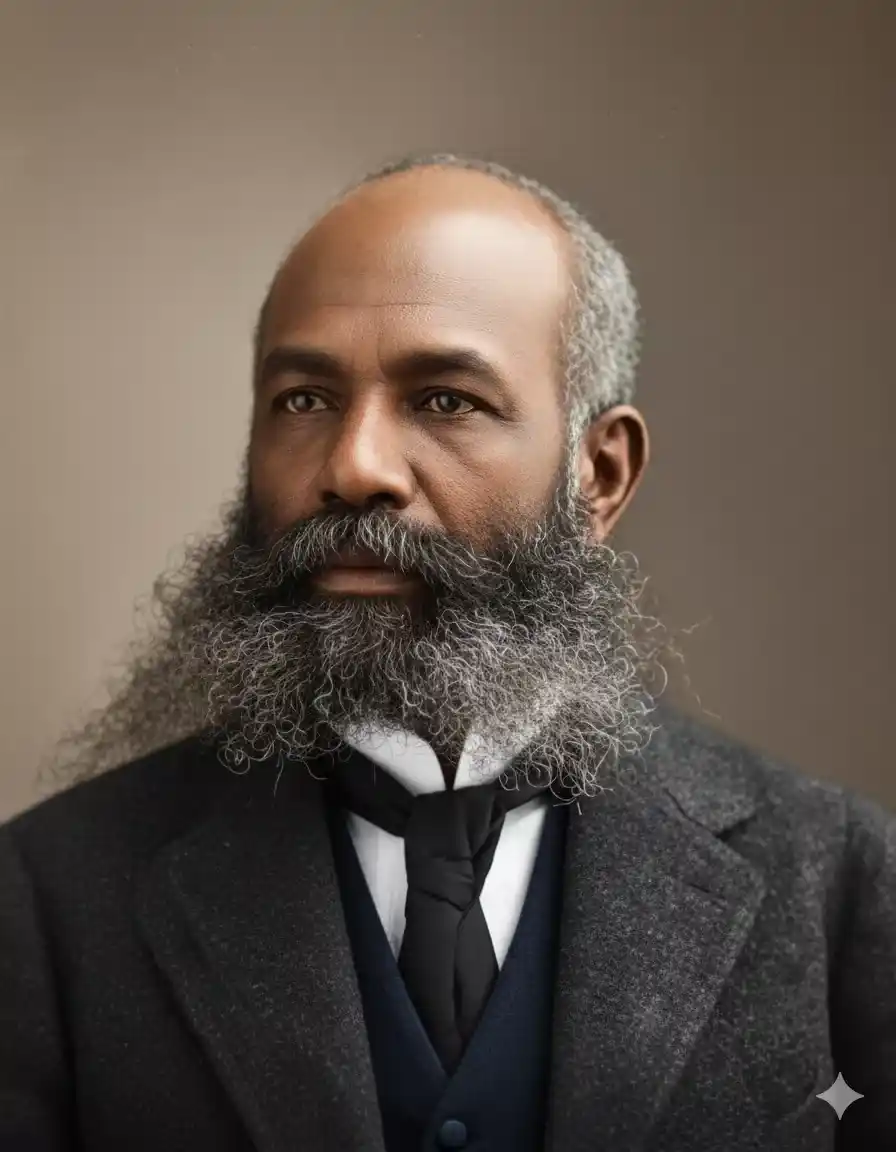
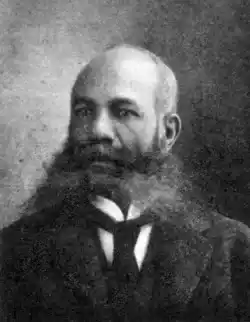
By Alexander Miles
Born in Ohio shortly before the Civil War, Miles worked various jobs, including as a barber, while moving across the United States to build his success. In Duluth, Minnesota, he became the first Black member of the local Chamber of Commerce. At that time, elevators were dangerous devices: both the cage and shaft doors had to be closed manually. A simple oversight by an operator would leave the shaft open, leading to frequent and tragic fatal falls.
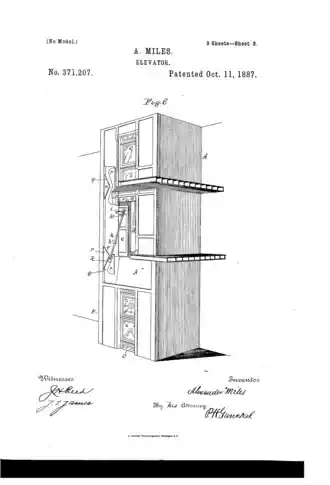
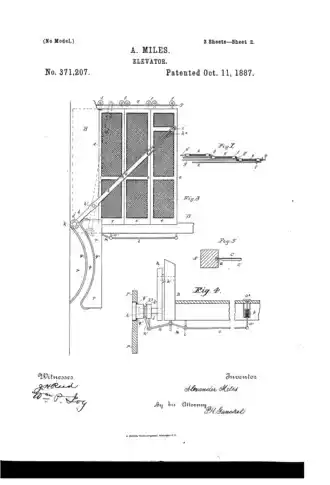
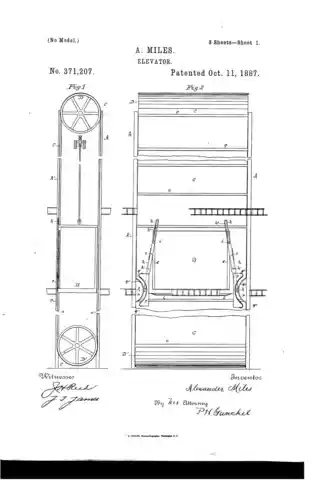
On October 11, 1887, Alexander Miles was awarded U.S. Patent No. 371,207 for his automated system. His invention relied on a flexible belt attached to the elevator cage and levers interacting with rollers placed at each floor. This device ensured that the movement of the elevator itself triggered the synchronized opening and closing of doors as soon as it reached a floor, making human error impossible.
The impact of Miles' invention is colossal. It turned the elevator from a risky machine into a reliable means of vertical transport, essential to the rise of skyscrapers. A committed entrepreneur, he also founded a life insurance company in Chicago specifically for African Americans, who were often denied coverage at the time. His legacy is that of a pioneer who successfully combined technical innovation with social protection for minorities.
Although his contributions were essential to the development of modern cities, official recognition came late. In 2007, Alexander Miles was posthumously inducted into the National Inventors Hall of Fame. Today, he is celebrated as one of the most important inventors of the 19th century for his contribution to public safety and mechanical engineering.